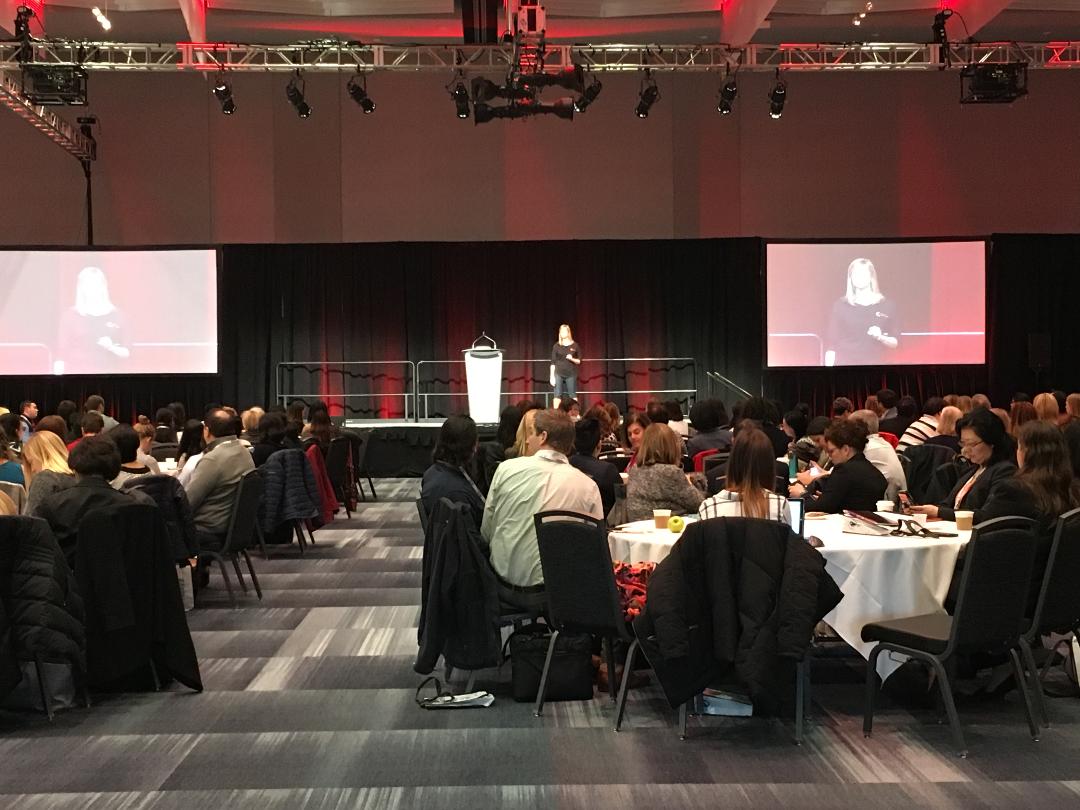
A sold out crowd for this year’s Women in Analytics Conference provided quick evidence of what an exciting time we’re experiencing. The attendee base encompasses a wide variety of titles, job roles, company sizes and educational backgrounds giving further credence to the cross-functional nature of the profession.
Robin Davies, Director of Data Operations, Global Data Insights & Analytics for Ford Motor Company started the day with explaining how Ford is using an analytics-first approach to rethink their customer journey. The insights coming from their analytics are helping the organization rethink not only product roll-out strategy, but also pricing strategies. One example given was that if they can understand their customer better to view them from a more lifecycle approach, then this can be fed back into their pricing model to offer lower price points to entry with increased confidence as to the total lifetime customer value. Davies also spent time explaining the enormity of data and how much data is really there to harness with all of us still really being at the very beginning of the process.
From the sessions we attended in which each speaker surveyed the room to understand the breakdown between developers, data scientists, analysts and functional business roles, there was a pretty even spread across the board. One session, in particular, hit the bulls eye in terms of cross-cutting techniques and applications and that was on word embedding. Bijaya Zenchenko of HomeAway blew everyone away with word embedding and the many different techniques and approaches readily available. We walked away wondering why are organizations still spending so much time manually trying to understand the digital customer journey and not pouring their money into an application that can scrape, aggregate and accelerate insights?
The lunchtime panel provided different viewpoints from women in analytics working in academia, functional leadership role and data engineering to hear first individually their work in the analytics’ field. Each presentation was unique with the common theme being that analytics is a commitment and defining it is paramount to achieving any sort of success. The caution towards understanding data bias came up repeatedly and each speaker was in agreement that we will not be overtaken by bots anytime in the near future. The panelists additionally agreed that the culture of an organization is a make-it-or-break-it element to analytics adoption and appreciation.